
What Is Structured Cabling?
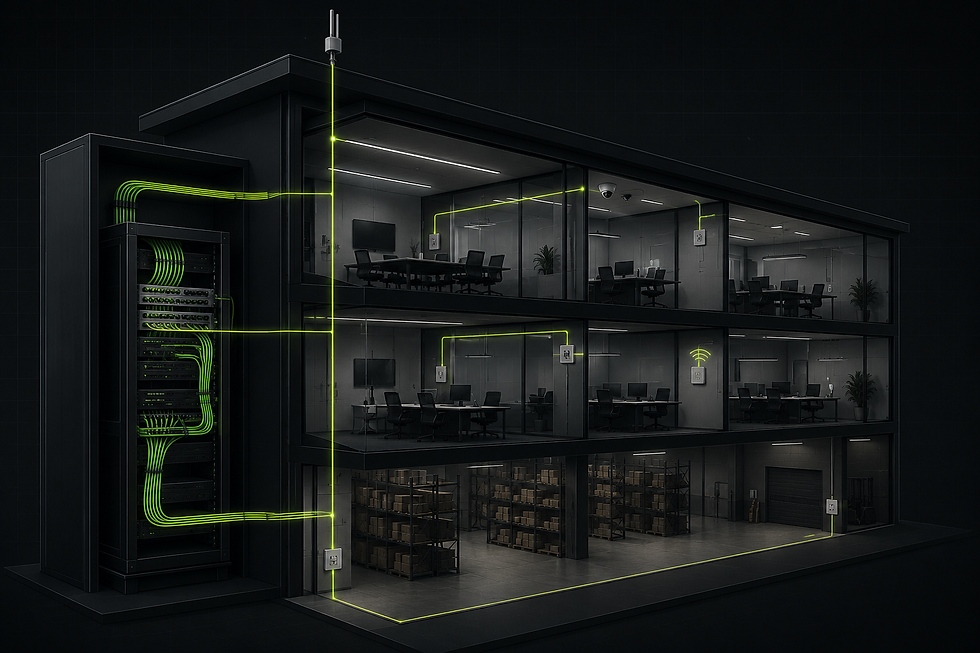
Structured cabling is the organized network of data, phone, and low-voltage cabling that connects every device, camera, and access point in your building back to a central system. Done right, it's planned once and built to handle whatever gets added to it later.
-
Supports network switches, servers, and workstations
-
Powers cameras, access control readers, and alarm panels running on the same network
-
Organized in labeled racks and pathways instead of a tangle of unlabeled wire
-
Designed with capacity for future expansion, not just current needs

Cat6 and Cat6a Data Cabling
Runs the physical backbone your network, phones, and security systems all depend on, rated for speed and reliability as your bandwidth needs grow. deactivate the moment a card goes missing.
Structured Cabling and Network Infrastructure Services
Network Racks and Patch Panels
Every cable run needs an organized home. Racks and patch panels keep your infrastructure labeled and accessible instead of a mess behind a closet door.
Low Voltage Wiring for Security Systems
Runs the physical backbone your network, phones, and security systems all depend on, rated for speed and reliability as your bandwidth needs grow. deactivate the moment a card goes missing.
Network Design and Infrastructure Planning
Adding new equipment later shouldn't mean tearing open a wall. We plan capacity into the initial build so future systems have somewhere to plug in.
The Infrastructure Behind Every Security System We Install
Access control, AI video monitoring, and intrusion alarms all depend on solid cabling and network infrastructure underneath them. A camera is only as reliable as the connection feeding it, and a system built on rushed or undersized wiring shows it the first time something goes wrong.
We plan cabling and infrastructure as part of the security systems we design, not as a separate afterthought handled by someone else.
Which Businesses Need Structured Cabling and Network Infrastructure?
Structured cabling matters most any time a building's network needs to support more than a few devices, or when new security or communication systems are going in.
✅ New construction and build-outs
✅ Office relocations and renovations
✅ Warehouses and distribution centers adding security or network equipment
✅ Multi-location businesses standardizing infrastructure across sites
✅ Facilities upgrading from outdated or undersized wiring
✅ Business parks and shared commercial buildings
Plan the Infrastructure Once, Add Systems Without Starting Over
The businesses that avoid the most rework are the ones that plan their cabling and network infrastructure before installing cameras, access control, or alarm systems, not after.
Getting the foundation right the first time means adding a new camera, badge reader, or sensor later is a simple connection, not a new construction project.
